















Factory Idle










Factory Idle looks like a clicker with a factory skin, all patient number-watching and passive growth, but it plays like a logistics puzzle that punishes lazy layouts. The idle label is almost misleading — the game keeps running while you are away, sure, but the actual skill ceiling is in how you arrange machines and belts, not in how often you check back.
| Genre | Idle factory-building simulation |
| Platform | Browser (Kongregate) |
| Inspiration | Assembly-line games like Factorio |
| Top Tier Output | Tanks and rockets |
What Factory Idle Actually Asks You to Optimize
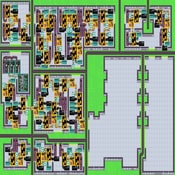
The core loop is placing machines and conveyor belts to move raw materials through a processing chain that ends in something sellable. Early factories are forgiving — a clumsy belt route still works, just slowly. That forgiveness disappears fast once chains get longer, and a lot of players ask why their Factory Idle income plateaus even as they add more machines: the honest answer is almost always a transport problem, not a production one.
Machines only output as fast as belts can clear their queue. A factory full of maxed-out processors sitting behind one undersized belt is a common beginner trap, and it looks identical to a production shortfall from the income graph alone.
From Scrap Metal to Rockets: The Production Chain
You start with simple stuff — basic components moving through a couple of processing steps — and the chain grows from there into genuinely complex military technology, tanks and rockets among the later tiers. Each new product tier does not replace the old one; it usually depends on it, so your scrap-tier lines stay relevant long after rockets unlock.
- Basic components — the entry tier, cheap and fast to process.
- Mid-tier assemblies — combine multiple basic components into one product.
- Military technology — tanks and rockets, requiring long, multi-stage chains.
Is Factory Idle like Factorio, the game it draws inspiration from? Structurally yes — the belt-and-machine logic will feel immediately familiar to anyone who has played it — but the pacing is idle-first, meaning the game is built around chains that keep running unattended rather than active real-time management.
Conveyor Belts Are the Real Bottleneck in Factory Idle
Belt speed and belt count matter more than most new players expect, and figuring that out is usually the moment a stalled factory starts moving again. A single overloaded junction can throttle an entire chain no matter how many machines feed into it.
The fix is rarely more machines. It is almost always rerouting, splitting a single belt into parallel paths, or upgrading belt speed at the exact junction where backlog is forming.
Refactoring: Tearing Down a Layout That Used to Work
- Identify which junction is holding the longest backlog.
- Reroute or duplicate the belt feeding that junction.
- Only then consider adding new machines further down the chain.
Veterans call this refactoring, and it is one of the more honest difficulty spikes in the game: a layout that comfortably supported your scrap-tier production will not survive the jump to assemblies without real rework. Players who resist tearing down old belts tend to stall out precisely at that transition.
Military-Tier Production and Why It Changes Everything
Unlocking tank and rocket production in Factory Idle is less a reward and more a new constraint — those chains are long enough that a single weak link anywhere upstream throttles the whole thing. By the time you reach this tier, the game has quietly taught you to think in terms of throughput rather than raw machine count, which is exactly the lesson its Factorio-style inspiration is built around.
Factory Idle earns its name honestly once you have felt a rocket line choke on a belt junction three tiers back — that is the game teaching you to read your own factory instead of just expanding it, and it is a very different kind of satisfaction than watching a number climb on its own.
Comments
There are no reviews yet. Be the first one to write one.
