












Particle Clicker









You click the particle once and the counter barely moves, a single unit of data next to a field that ends, eventually, at the Higgs boson. It feels like any other clicker in that first minute, but Particle Clicker is quietly walking you through more than a century of real physics history one click at a time, and that framing changes how the whole game reads once you notice it.
| Genre | Educational incremental clicker |
| Platform | Browser |
| Theme | History of particle physics |
| Endgame Reference | Large Hadron Collider |
What Particle Clicker Asks You to Click First
The opening loop is almost identical to Cookie Clicker on purpose — click a central particle, accumulate data, spend that data on upgrades that produce more data automatically. That debt is worn openly; this is a physics-flavored answer to that same core structure, not a disguised copy pretending otherwise.
Is Particle Clicker actually educational, or is the physics theme just decoration? It leans genuinely educational — each unlock is tied to an actual milestone in physics history rather than an arbitrary flavor name, which is unusual for the genre.
From the Electron to the Higgs Boson: A Real Timeline
- The electron — the earliest discovery your research ladder passes through.
- The atomic nucleus and early subatomic particles.
- Quarks and the particles built from them.
- The Higgs boson — the discovery most players recognize by name before playing.
Early in the game, the electron unlock barely changes your production. By the time you reach the Higgs boson tier, the numbers involved are large enough that the game is clearly signaling you have reached the frontier of what current physics has confirmed.
Data, Not Cookies: What Your Clicks Actually Generate
Clicking the central particle runs a simulated test and produces data, the currency you spend on every upgrade in the game. Framing the resource as data instead of an arbitrary count is a small choice that keeps the physics theme consistent all the way through, rather than treating it as a coat of paint over a generic clicker. History-minded players tend to notice this consistency fastest, since it means the game’s economy and its educational content are the same system rather than two layers bolted together.
Research Upgrades Tied to Real Physics Milestones
Every upgrade in the research tree corresponds to something that actually happened in the history of particle physics, which means progressing through the game is functionally the same as reading a condensed timeline of the field. Players who already know some physics history tend to recognize milestones before unlocking them; players who do not tend to pick the history up passively just by playing. Optimization-focused players who just want the fastest path to bigger numbers coexist here with players who slow down specifically to read each milestone’s flavor text, and neither approach is really wrong.
The one honestly divisive point players raise is pacing — because the game commits to historical accuracy, some stretches of the tree feel slower than a purely arbitrary clicker would, since real scientific progress was not always fast either.
The Large Hadron Collider as an Idle Endgame
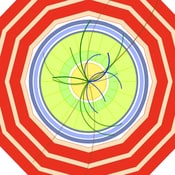
Late-game production scales toward Large Hadron Collider–level output, tying your idle numbers to the actual machine that confirmed the Higgs boson in reality. It is a neat piece of design: the biggest number in the game corresponds to the biggest physics instrument that exists.
Why Particle Clicker Rewards Reading, Not Just Clicking
Unlike most clickers, skimming past the flavor text here means missing the actual point of the game. Community discussion around Particle Clicker tends to focus as much on what each unlock represents historically as on optimal upgrade order, which is a different kind of conversation than most incremental games generate.
What a Weekend Hackathon Built
How long does Particle Clicker take to finish? Most players clear the core research tree in a single sitting or two, which lines up with its origin as a weekend hackathon project rather than a long-term live-service idle game. It was never designed to be a hundred-hour commitment.
Particle Clicker’s Debt to Cookie Clicker
Was Particle Clicker really made at CERN? Yes — it grew out of a CERN-hosted hackathon weekend, explicitly borrowing Cookie Clicker’s structure to teach real science, and that origin is part of why the game reads more like an interactive timeline than a typical incremental title chasing bigger numbers for their own sake.
Particle Clicker earns its niche appeal from that honesty: the Higgs boson at the end of your research tree is not a made-up final boss, it is the actual most significant confirmed discovery in the field, and reaching it in-game carries a little of that real-world weight.
Comments
There are no reviews yet. Be the first one to write one.
