

















Idle Breakout










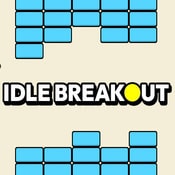
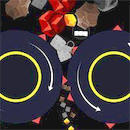
You drop your first Sniper Ball onto the board, watch it lock onto a brick with a soft mechanical click, and by the time the level clears you already suspect Idle Breakout is not the sleepy clicker its screenshots promise. Balls bounce, bricks pop, money stacks up, and within a few minutes you are staring at numbers that no longer fit comfortably on screen.
| Genre | Idle / Incremental Brick Breaker |
| Core Mechanic | Automated balls destroy bricks to generate money for upgrades |
| Currencies | Money, Black Bricks, Gold |
| Platform | Browser and Windows |
The Basic Ball to Cannon Ball Curve in Idle Breakout
Every run starts with a single Basic Ball rattling around a grid of bricks, doing modest damage and clearing rows about as fast as you would expect from something that costs almost nothing. The early game is really a lesson in scale: buy a second ball, then a third, and the wall of bricks that looked intimidating a minute ago starts thinning out on its own while you do something else in another tab. This is the whole pitch of the game, and it works because the payoff curve is steep enough to feel earned rather than handed to you.
Cannon Balls change the rhythm the moment they show up. They hit harder than Basic Balls but travel slower and cost real money, so the decision to switch your economy toward them is the first real strategic choice most players make. Some players push Cannon Balls exclusively once they have enough cash flow, because raw damage per hit clears thick brick clusters faster than volume alone.
Money from broken bricks funds both new balls and per-ball upgrades, and the ratio between the two determines how quickly a level actually clears. Spend everything on new balls and your board gets crowded but weak. Spend everything on upgrades and a handful of balls carry the whole level. Neither approach is wrong, but the game rewards players who read which one a given level actually needs.
Sniper Balls, Cannon Balls, and the Scatter Ball Debate
Once Sniper Balls unlock, the meta conversation in every comment section starts. Sniper Balls target bricks directly and cannot miss, which makes them absurdly efficient once their speed is upgraded, and a lot of players lean on them almost exclusively through the midgame. Others swear by a mixed loadout instead, arguing that variety keeps you from getting hard-countered by a boss that shrugs off one damage type.
- Sniper Ball — locks onto a target brick and cannot miss, prized for consistency
- Cannon Ball — slow but heavy, favored for chewing through dense clusters
- Scatter Ball — splits its hit across nearby bricks, good for wide, thin rows
- Poison Ball — applies damage over time, useful against tougher targets
This is where community vocabulary gets specific. Players talk about “capping” a ball’s speed, meaning pushing it to its maximum multiplier before spending anything on damage, because a ball that swings faster effectively deals more damage per second than one that hits harder but slower. It is a subtle distinction that trips up a lot of newcomers who assume damage upgrades are always the priority.
The debate never fully resolves, and that is part of why it keeps coming up. A completionist chasing every achievement tends to keep a bit of everything active, while a speedrunner optimizing for the fastest possible level clear strips the loadout down to whatever combination tests fastest, usually Sniper and Scatter balls stacked early.
Black Bricks and the Climb Toward Boss Fights
Somewhere past the early levels, black bricks start appearing among the normal ones. They soak up far more damage and are meant to be left for last, since clearing everything else first often triggers extra rewards or simply keeps your board manageable. New players regularly waste time chipping away at a black brick early, only to watch it block the rest of the level from clearing efficiently.
Black bricks are also the currency for boss fights, accessed through the skill tab once you have accumulated roughly five thousand of them. Fighting a boss brings back every previous boss as well, each with an extra life stacked on, so the third fight might mean facing Block Head with three lives, Blocky Balboa with two, and Blocko with one, all in the same encounter.
That stacking format is one of the most divisive design choices players discuss. It makes boss fights feel like a genuine test of your ball composition rather than a scripted checkpoint, but it also means a single weak matchup against an early boss can quietly wall your progress for a long stretch if your loadout leans too hard into one damage type.
Claiming Gold and What Survives the Reset
Idle Breakout eventually nudges you toward claiming gold, the game’s prestige system. Claiming resets your money, balls, and most upgrades back to nothing, but converts your progress into gold that permanently boosts future runs. It is a familiar shape for anyone who has played other incremental games, but the exact math behind how much gold a given run is worth keeps changing as your ball count and boss clears climb.
The tricky part is timing. Claim too early and you leave value on the table. Claim too late and you are grinding levels that barely move your gold total, since the marginal cost of another ball climbs into ranges that stop making practical sense.
Most experienced players describe a rhythm rather than a fixed rule: play until the board stops feeling exciting, claim, and start the climb again with a stronger baseline. That rhythm is really the whole loop of the game once you look past the bouncing balls.
Speed Caps and Late-Game Grinding
Ball speed in Idle Breakout is capped at 40 by default, and one of the deeper skill tree unlocks raises that ceiling to 60. Getting there takes a serious grind, but the payoff compounds across every ball you own rather than just one, which is why veteran players prioritize it well before most damage upgrades.
Late-game strategy tends to converge on a fairly specific loop: stack Sniper Balls early for cheap, reliable damage, spend on speed rather than raw power, and only start diversifying the loadout once speed on every ball is maxed out. Getting to that point usually takes patient, repeated play rather than any single trick.
By the time you reach the higher boss tiers, the skill tree has usually opened up enough passive bonuses that a well-built board can clear levels in a handful of seconds. Reaching that stage is less about discovering a secret and more about not wasting early currency on upgrades that stop mattering later.
Common Mistakes New Players Make
The single most common early mistake is upgrading ball damage before ball speed, since damage feels more intuitive but speed scales better once you understand how the underlying math works. A lot of players only figure this out after their first prestige reset shows them how little their old upgrades actually mattered.
The second mistake is ignoring black bricks entirely instead of saving them for boss fights, which leaves a huge amount of value sitting untapped on the board. A completionist type especially benefits from tracking black brick count deliberately rather than letting it accumulate by accident.
Confusing menus do not help. Several upgrades are locked behind prerequisites that are not obviously explained, and it is common to see players assume a skill is broken when it is simply waiting on an earlier unlock. Reading the skill tree carefully before spending currency saves a lot of frustration once you are several boss tiers in.
Questions Players Ask About Idle Breakout
What is the best ball combination in Idle Breakout?
There is no single answer, but a heavy Sniper Ball core with some Scatter Balls for wide rows is the most commonly recommended early combination, since Sniper Balls never miss and scale cleanly with speed upgrades.
How do you unlock boss fights?
Boss fights open up in the skill tab once you have collected roughly five thousand black bricks, and each fight after the first stacks every previous boss, including Block Head and Blocky Balboa, on top of the new one.
When should you claim gold for the first time?
Most players claim gold once new balls start costing far more than the money they generate in a reasonable time, a threshold that usually appears once dozens of balls are active and level clears begin to slow down noticeably.
Idle Breakout rewards the kind of player who is willing to sit with a spreadsheet-brain approach to a game about bouncing balls, and once Blocko has been beaten a few times over, that appeal only gets sharper rather than fading. It is a small game with a surprisingly deep loop hiding underneath the noise.
Comments
There are no reviews yet. Be the first one to write one.
