















All the Gold in Fort Locks










You are standing in front of one locked door, holding one key, with a single visible pile of treasure somewhere beyond it — nothing in the room hints yet at what happens the moment you actually turn that key. That is the entire opening state of All the Gold in Fort Locks, and it tells you almost nothing about what is coming.
| Genre | Puzzle |
| Platform | Browser |
| Core Mechanic | Opening doors with different keys |
| Goal | Reach the treasure |
One Key Changes Everything in All the Gold in Fort Locks
Key choice is the entire mechanical language of the game, and it does more work than it looks like it should. Using a different key on the same door does not just open it differently — it can change which rooms exist beyond it entirely, spawning new locks and new keys that were not there a moment ago. Players who treat every key as interchangeable tend to get stuck first, since the puzzle only opens up once you start reading what each individual key actually changes.
Doors, Locks, and a Layout That Rewrites Itself
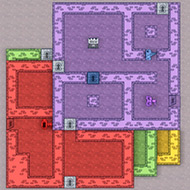
The starting setup is deliberately minimal: a few doors, one key, one treasure. What makes it interesting is that the layout is not fixed behind those doors — depending on which key opens which lock, new rooms appear, changing the shape of the puzzle you are actually solving in real time.
Why All the Gold in Fort Locks Never Needs a Second Mechanic
There is no combat, no timer, no secondary system competing for attention — every puzzle in All the Gold in Fort Locks is built entirely from doors, locks, and keys reacting to each other. That restraint is part of what critics and players both point to as the game’s strongest design choice: it never dilutes a genuinely clever core idea with unrelated padding.
Reading a Room Before You Use a Key
Because using a key can restructure the room instead of simply progressing through it, acting too quickly is the most common way players tangle themselves up. Pausing to consider what a key might do to the layout before committing to it saves far more time than it costs. Methodical players tend to map out every visible lock before touching a key at all, while players who prefer momentum over planning learn the same lesson the harder way, backtracking through a room they just rearranged.
The Single Treasure That Anchors Every Puzzle
No matter how many new rooms, locks, and keys appear as a puzzle unfolds, there is always exactly one treasure to reach, which keeps every configuration change grounded in a clear goal rather than spiraling into confusion. That single fixed point is what makes even the most rearranged layouts still feel solvable.
- Does using the wrong key ever make a puzzle unsolvable? No — the layout changes in response to key choice, but the treasure always remains reachable through some combination of the doors and keys that appear.
- Is there a time limit or fail state in All the Gold in Fort Locks? No, the puzzles are untimed, so there is no pressure beyond the challenge of reading the room correctly.
All the Gold in Fort Locks earns its charm from how much complexity it wrings out of one simple rule — a key, a door, and a layout willing to rewrite itself the moment you commit to turning that key.
Comments
There are no reviews yet. Be the first one to write one.
