















After the Collapse









After the Collapse looks like a straightforward post-apocalyptic base builder from its opening screens, but it plays like a management sim wearing a survival game’s clothes, where a single sick colonist or a poorly timed raid can unravel weeks of careful planning. The distance between what the marketing promises and what an actual playthrough demands is exactly what keeps people coming back to it.
| Genre | Base-Building Survival with Light 4X Elements |
| Core Mechanic | Manage survivors, build a multi-layer base, and send expeditions across a world map |
| Playable Factions | Survivors, Mutants, Cannibals |
| Platform | Windows |
Z Levels and the Vertical Base in After the Collapse
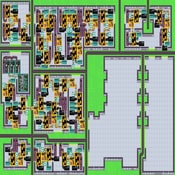
Most colony sims keep you working across a flat map, but After the Collapse lets you dig straight down through Z levels into caverns and old sewer systems, and that single design choice reshapes how a base actually functions. Storage rooms end up tucked underground for protection, workshops sprawl across two or three layers, and defensive chokepoints get built with verticality in mind rather than a single perimeter wall.
Digging down also exposes resources that surface scavenging never reaches, which pulls players into the underground layers earlier than they might expect. It is common to start a run focused purely on surface buildings and then realize, a few in-game weeks in, that the real resource pressure is coming from what is sitting beneath the base rather than around it.
The tradeoff is exposure. Tunnels connect areas you might not want connected, and a breach from below can put raiders or creatures inside rooms that were otherwise well defended. Balancing how deep to dig against how much of the base becomes vulnerable is a running tension through most of a playthrough.
Survivors, Mutants, and Cannibals as Starting Factions
Choosing a faction at the start of a game changes far more than cosmetics. Survivors get the broadest tech tree and the most flexible early options, but they are physically fragile and depend heavily on good gear to stay alive. Mutants hit harder in melee and get earlier access to taming and expeditions, at the cost of a much narrower tech tree and frequent internal strife among the colony. Cannibals share the human tech tree but start with rough gear and weaker base stats, leaning instead on bone weapons and a grim willingness to use captured enemies as a food source.
This is where the game earns a lot of its reputation in player communities. Running a Mutant colony feels noticeably different from a Survivor run, not just in stats but in which threats actually matter, since Mutants shrug off diseases that would otherwise devastate a human colony during a bad outbreak.
Newer players are pushed toward Survivors first, and that guidance holds up well, since the wider tech access gives more room to recover from early mistakes. Once you understand the base loop, Cannibals and Mutants turn the same systems into genuinely different playthroughs rather than reskins of the same strategy.
Expeditions and the Dynamic World Map
The world map in After the Collapse is not a static backdrop. Other factions compete for control of production centers scattered across it, and sending your own colonists out on expeditions is how you recruit new survivors, recover lost technologies, and push back against rival groups before they consolidate too much territory.
- Scout nearby production centers early, since leaving them contested for too long lets other factions claim them permanently.
- Send expeditions only once colonists carry decent gear, because losing a well-equipped survivor on the map is far costlier than losing a fresh recruit.
- Track which factions are expanding aggressively, since diplomacy or open conflict with them becomes almost unavoidable later.
Expeditions also feed directly into the base loop. Loot recovered on the map funds research back home, and repairing a captured production center can shift the entire regional balance of power in your favor, which is a satisfying moment the first time it clicks into place.
Bunkers, Lost Technology, and the Robotic Army Quest
Scattered across the world map are forgotten bunkers, explored through an interactive story system rather than a simple loot drop. These sequences are some of the densest narrative content in the game, and they are also how you eventually gain access to building a customizable robotic army, a quest line that only appears once specific requirements are met and takes you through one of the most dangerous bunkers in a given world.
The bunker system rewards patience. Rushing in underprepared tends to end badly, since these locations were deliberately tuned to punish a colony that has not yet built up solid combat capability. Players in forums frequently compare notes on which bunker events are worth the risk and which ones are better left alone until much later in a run.
Once the robotic tech is unlocked, it becomes one of the more distinctive tools in the game, letting a colony field customizable robots alongside its regular defenders. Getting there is deliberately slow, and that pacing is one of the more debated aspects of the design, since some players find the gate satisfying while others feel it arrives too late to meaningfully change an already-established playthrough.
Captured Enemies, Taming, and Colony Defense
Enemies defeated in combat do not simply disappear. After the Collapse lets you take prisoners and use them as forced labor or as commodities to trade, and the same system extends to taming giant creatures encountered out in the world, which can then serve as pets, a food source, or an active part of your defenses.
Defense itself leans on automated turrets, traps, and structural chokepoints rather than relying purely on armed colonists standing guard, which matters once enemy variety expands. Later threats like armored scorpions and crabs are tough enough in melee that a base without prepared defenses can lose colonists fast during a serious raid.
Weapon variety grows over time as well, and crafting something like an electric axe or a chainsaw gives melee-focused colonists a real answer to armored threats instead of leaving them dependent on guns and ammunition that are often in short supply.
Special Events and Colony Management
Beyond combat, the game constantly throws smaller crises at a growing colony. Sicknesses spread if hygiene and medical care are neglected, fires break out during heat waves if fire suppression is not planned for, and mental breakdowns hit colonists who are overworked or isolated for too long. None of these events are dramatic on their own, but they stack, and a colony that ignores enough of them at once can spiral quickly.
This is the part of the game that a lot of players describe as the real difficulty curve, more than any single fight. Managing dozens of survivors means juggling food, mood, health, and defense simultaneously, and it is easy to let one slip while focused on another.
Civilians occasionally request help as well, offering a choice between short-term risk and long-term colony growth. A management-focused player tends to accept these requests reliably to grow the population, while a more defensive player often skips them to avoid overextending a base that is still vulnerable.
Common Questions About After the Collapse
- What is the best starting faction in After the Collapse? Survivors are the most commonly recommended starting faction because of their broad tech tree and flexibility, though Mutants and Cannibals offer distinctly different playthroughs once the base systems are understood.
- How do you unlock the robotic army in the game? Building a robotic army requires triggering a specific random event and then completing a quest through one of the world map’s most dangerous bunkers, rather than researching the technology directly.
- Can you play After the Collapse without combat? Combat is difficult to avoid entirely, since raiders, mutants, and creatures will threaten a colony regardless of playstyle, but a defense-focused setup using turrets and traps can reduce how often colonists need to fight directly.
After the Collapse keeps its hooks in through the sheer number of systems layered on top of each other, from the Z level tunnels beneath a base to the robotic army waiting at the end of a dangerous bunker quest. Few base builders let a single Mutant colony feel this different from a Cannibal one, and that variety is the main reason players keep starting new runs long after their first colony falls.
Comments
There are no reviews yet. Be the first one to write one.
