














Galaxy Clicker







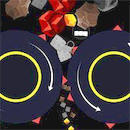
A single planet in Galaxy Clicker earns you almost nothing on its own — the real income only starts once that planet completes a full revolution around its sun. From there, the game becomes a question of how many planets you can keep spinning at once, and how big you can grow each one before merging it into something bigger.
Galaxy Clicker: Income Tied to Orbits, Not Clicks
Every planet you own generates income each time it completes a revolution, which means Galaxy Clicker rewards patience over rapid clicking almost from the start. Watching a slow orbit finally complete and pay out is a different rhythm than most clicker games, closer to waiting for a timer than tapping for instant feedback.
New players sometimes expect clicking itself to be the primary income source, carried over from habits built in more traditional clickers. Galaxy Clicker shifts that expectation almost immediately — your planets are the engine, and your job is mostly deciding where to spend the income they generate.
Merging Planets Into Bigger Ones
Income buys new planets, and those planets can be merged together to form a single larger one rather than simply sitting side by side. A bigger merged planet generates more per revolution than its smaller components did individually, which makes merging a genuine strategic decision rather than just a visual flourish.
Deciding when to merge versus when to keep buying smaller planets to expand your overall count is one of the more interesting tensions in Galaxy Clicker — more planets means more orbits completing at once, but fewer, bigger planets can mean stronger individual payouts.
Upgrading Stamina, Income, and Speed in Galaxy Clicker
Beyond planets themselves, upgrades exist for stamina, income, and orbital speed, each pulling a different lever on how quickly your star system generates value. Speed upgrades in particular shorten how long each revolution takes, which compounds with every planet you already own rather than benefiting just one at a time.
Balancing spending between new planets and these broader upgrades is where most of the game’s strategy actually lives, since neither path alone scales as well as splitting investment between them.
Why is my income barely moving even though I own several planets?
Income only pays out on completed revolutions, so a system full of planets that have not yet finished orbiting will feel slow — speed upgrades address this directly by shortening revolution time across the board.
Is it better to merge planets or keep buying more?
Both approaches work, but merging concentrates payout into fewer, stronger planets while buying more spreads out how many revolutions are completing simultaneously — a mix of both tends to outperform leaning entirely on one.
Galaxy Clicker turns something as slow as an orbit into the core of its economy, and there is a particular payoff in watching a merged planet finally complete its revolution for a payout your smaller planets never could have matched alone.
Comments
There are no reviews yet. Be the first one to write one.